
Tznius Dressing for the Body You Actually Have
Five real figure situations, the tznius proportions that help, and seven current dresses, tops, and skirts to show the idea.
As an Amazon Associate, The Market Drop earns from qualifying purchases. This post may contain other affiliate links — we may earn a commission on purchases made through them.
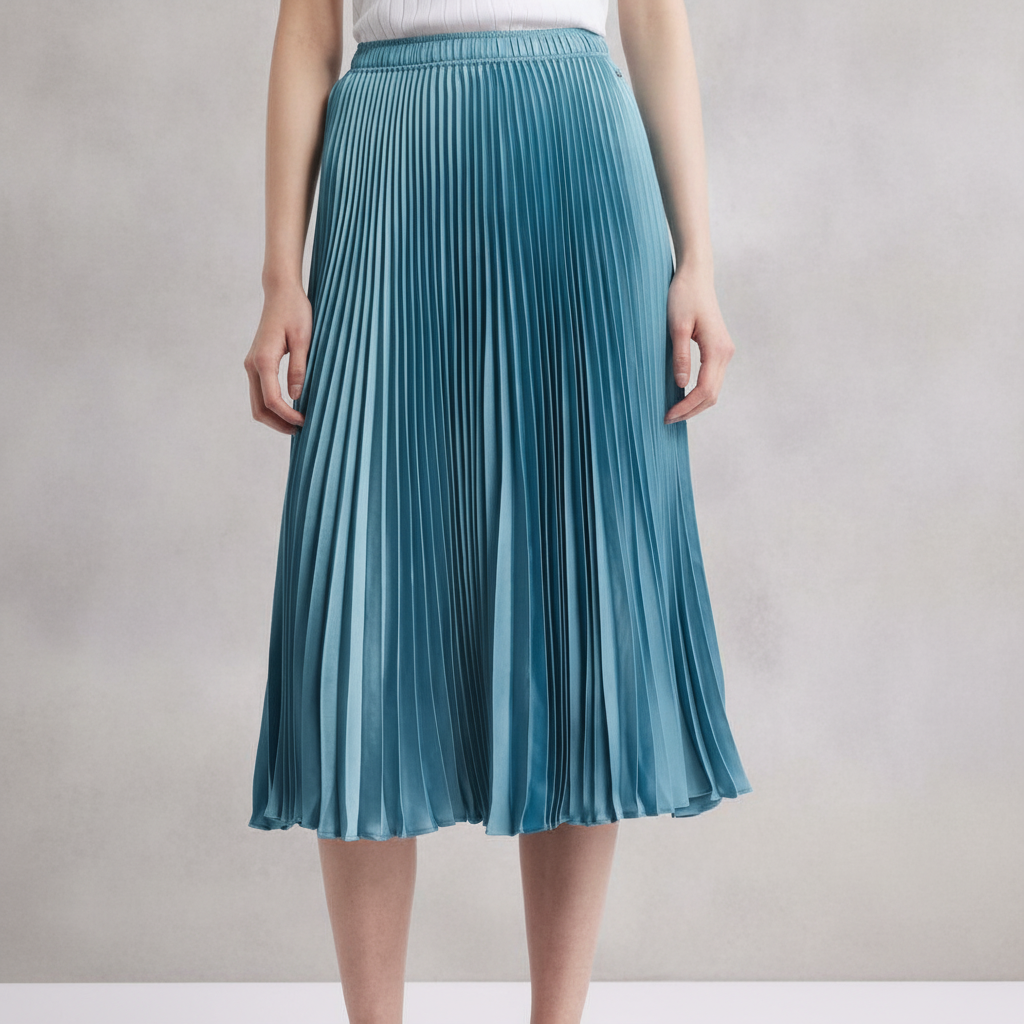
Five fit situations, a lot of skirts, and zero interest in telling you what's wrong with you.
You already know the exact moment getting dressed goes sideways. The skirt that looked so right on the hanger and turns strange the second it's on you. The top that fits everywhere except the one place it has to. Not a character flaw, not a sizing conspiracy. It's proportion, and proportion is workable.
So: five fit situations, what helps in each, and a few real things on the site that show the idea. None of it is law. Fabric behaves differently on everyone, height changes every rule, and your standards are yours.
When your top half arrives first
Fuller bust, broader shoulders, a shape that reads strong from the waist up. The trouble is rarely the bust. It's everything else being cut for someone with less going on.
Structure helps up top, but only a certain kind. You want a shoulder seam that lands on your shoulder, and a neckline with width to it — a soft wide boat, a shallow scoop, a V that stops long before it becomes a conversation. High crew necks turn a full bust into one continuous shelf, which is why that sweater you love feels wrong and you can never say why.
Then give your bottom half something to say. A pleated midi has real volume and swing, so the eye stops treating your top half as the whole story.
One more thing: shells should end at your hip, not mid-bust. One that stops halfway across draws a horizontal line in the least useful place available. And the day you find a button-front blouse that lies flat across the chest, you buy it in every color. You know this already.
When the hips and thighs do most of the talking
Skirts fit your waist and then argue with you at the seat, or they fit the seat and swim at the waist. Every alteration lady in town has met you.
A-lines work here, but the A has to begin at the waist, not the hip — a skirt that drops straight and then flares at your widest point is adding width where there's already plenty. Look for fabric with backbone. Ponte, twill, a heavier crepe. Thin jersey clings to everything it touches and then you spend Shabbos smoothing it down.
Above the waist, give the eye something interesting. A ruffle, a sleeve with shape, a print, a bow. A bow does an unreasonable amount of work for how little effort it takes.
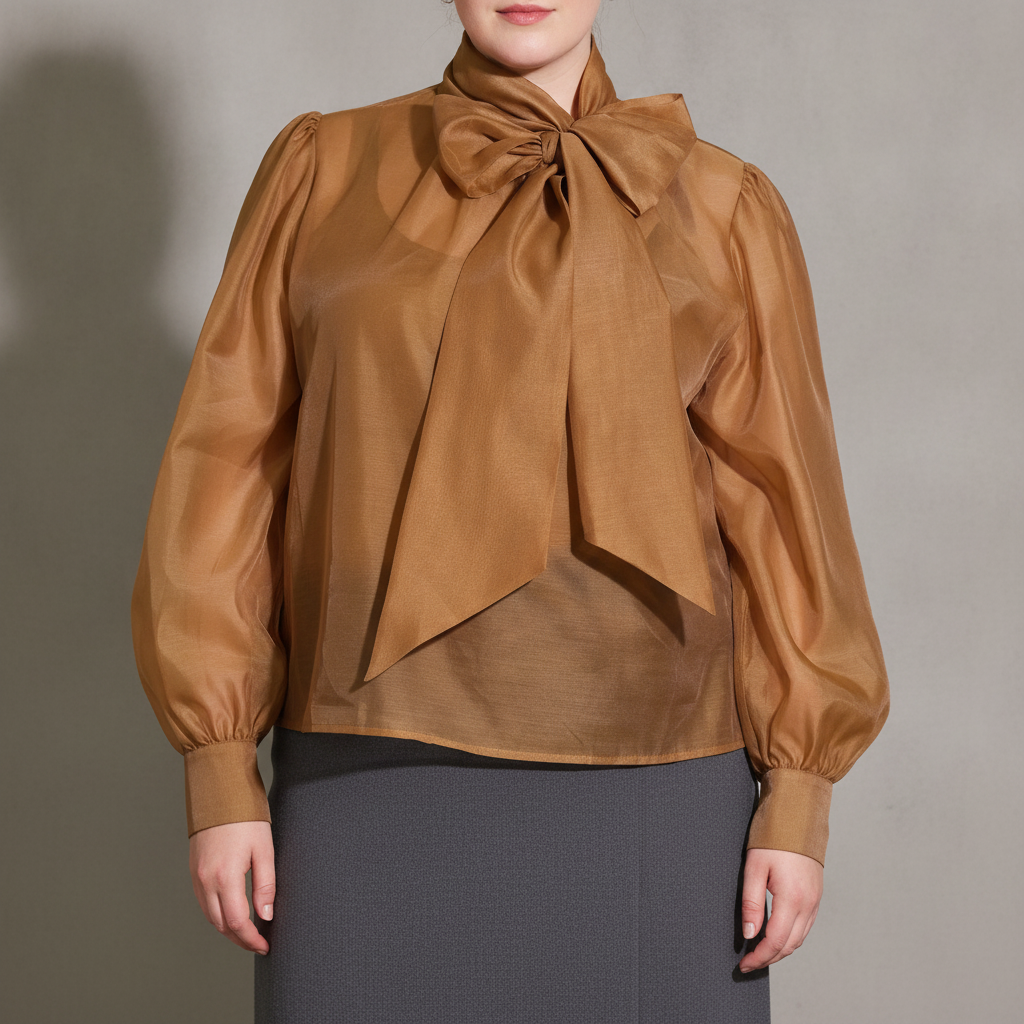
That one is sheer organza, so it is a layering piece and nothing else. It needs an opaque shell underneath, full stop, and then a straight or gently A-line skirt to keep the fullness where you want it.
When you go more or less straight down
Your waist isn't dramatically narrower than your ribs or your hips (rectangle, if you've been called that). Belts slide. Fitted dresses hang like a paper bag with sleeves.
Stop hunting for a waist and just build one. A wrap, a seamed bodice, a belt sitting wherever you decide your waist lives, or a peplum, which is essentially a waist with an opinion. A ribbed peplum knit does the job without the fuss.
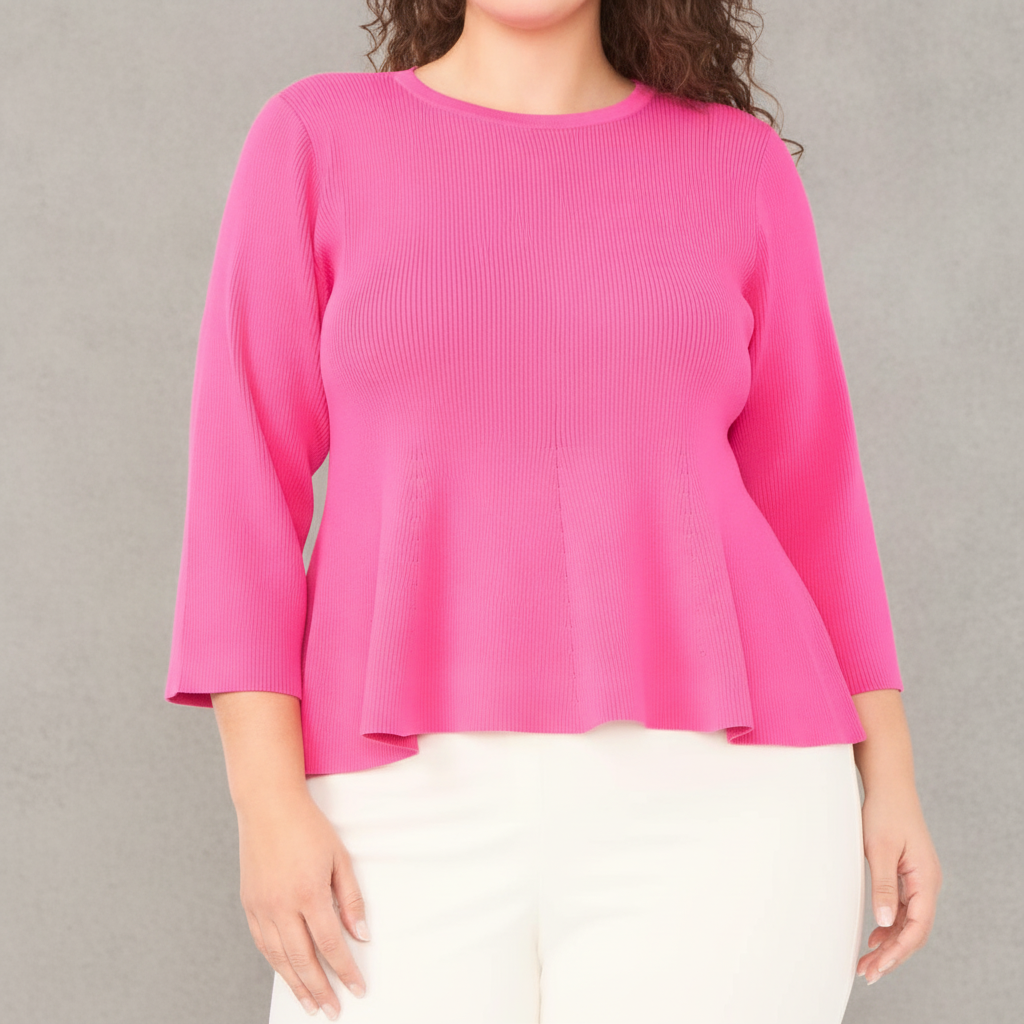
Wear something like that with a slim straight midi. The peplum needs something narrow to break against, or the outfit just goes out and keeps going.
When your middle is the softest part of you
Whether it's four babies or simply how you're assembled, the instinct is to size up everywhere and let the extra fabric handle it. It doesn't. Fabric with no shape reads as more of you, not less.
What helps is skimming. A knit that grazes and keeps moving, a released waist, a slight empire seam, vertical seaming through the body. A twofer sweater dress is quietly excellent here, because it reads as a sweater and a skirt with none of the waistband negotiation.
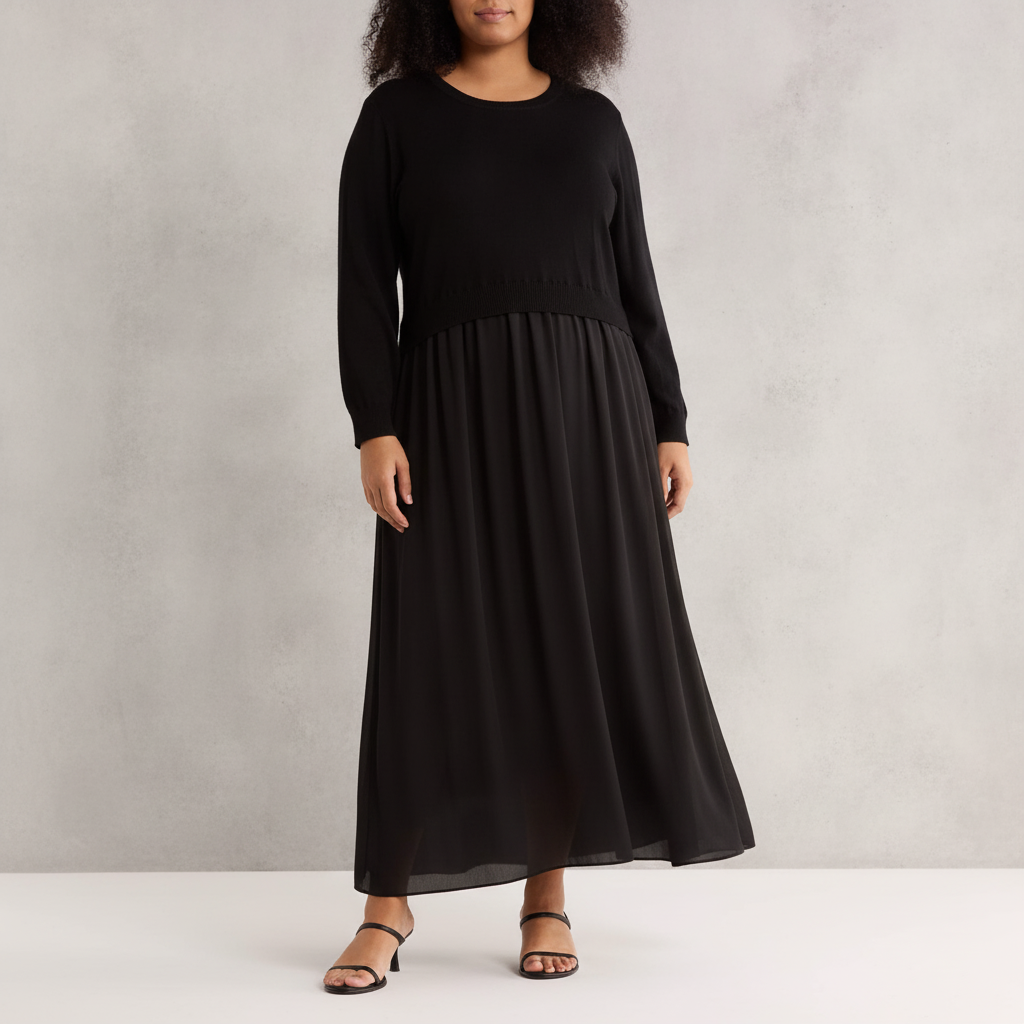
Print is the other underrated move. A small-to-medium busy print gives the eye a hundred places to land, which solid black has never once done for anybody.
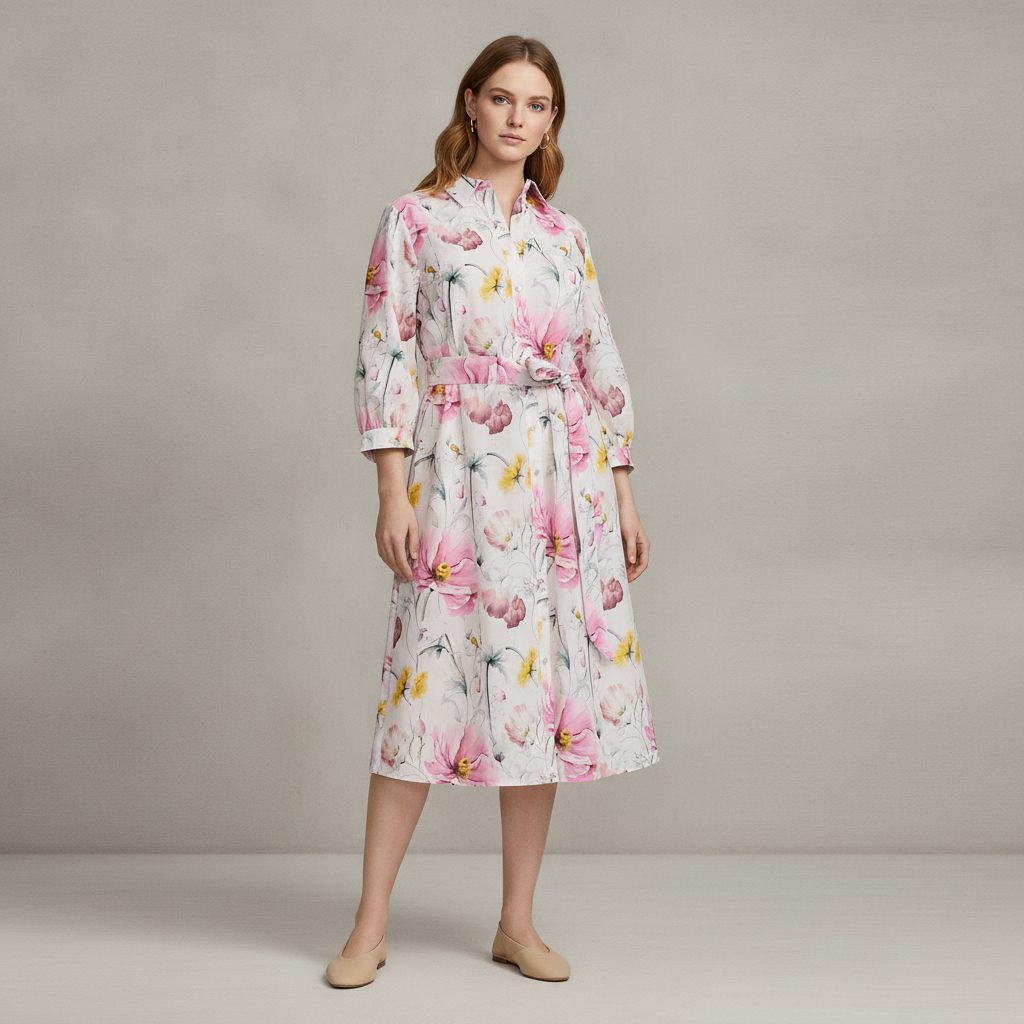
That one's a three-quarter sleeve — for some women a regular Sunday dress, for others a shell-underneath situation. Check it against your own standard before you fall in love with the print.
When the real problem is your height, not your shape
Some of us aren't a shape situation at all. We're a length situation.
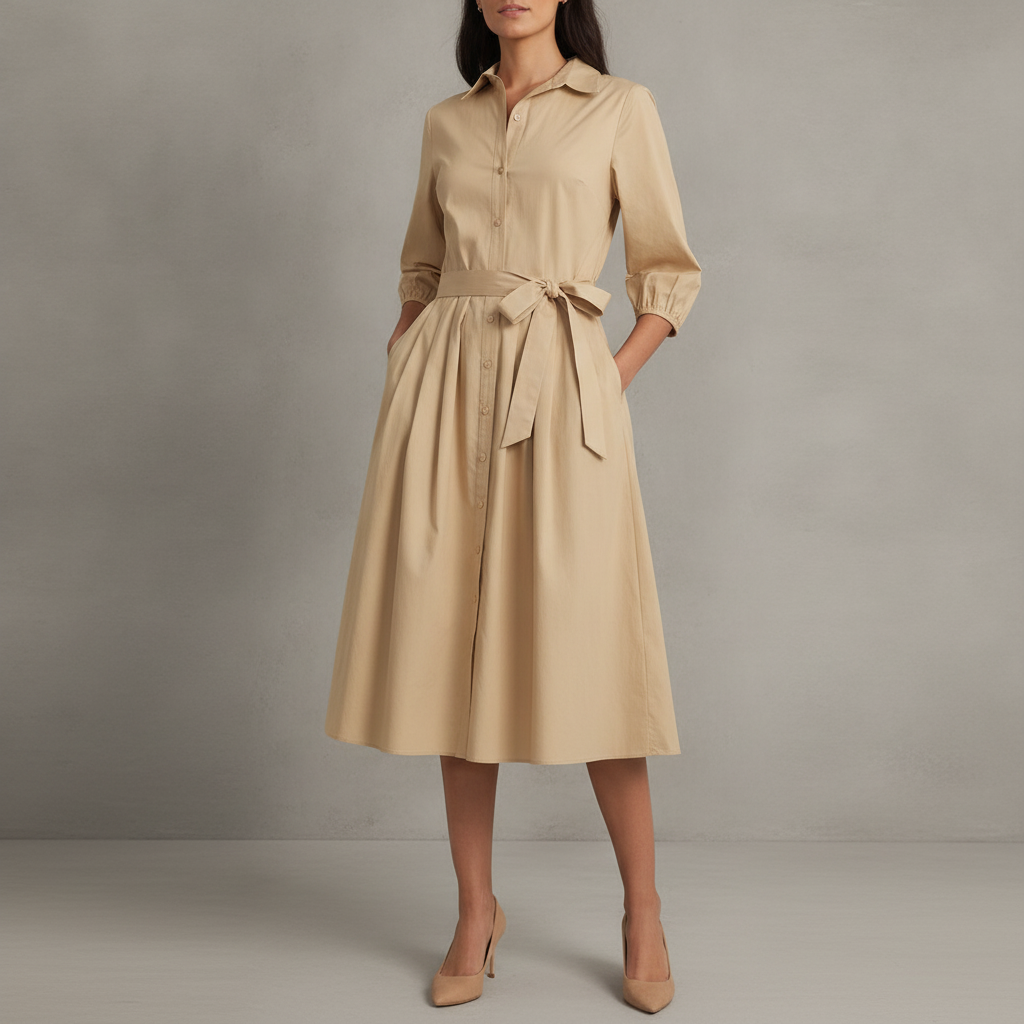
Short: a midi is a maxi on you, and a maxi is a hazard on stairs. Keep the vertical line running — a button placket down the front of a dress does more for your proportions than any amount of heel. Keep color running shoulder to hem rather than chopping yourself at the waist, and get the sleeves shortened, because a sleeve that swallows your hand ages an outfit by ten years.
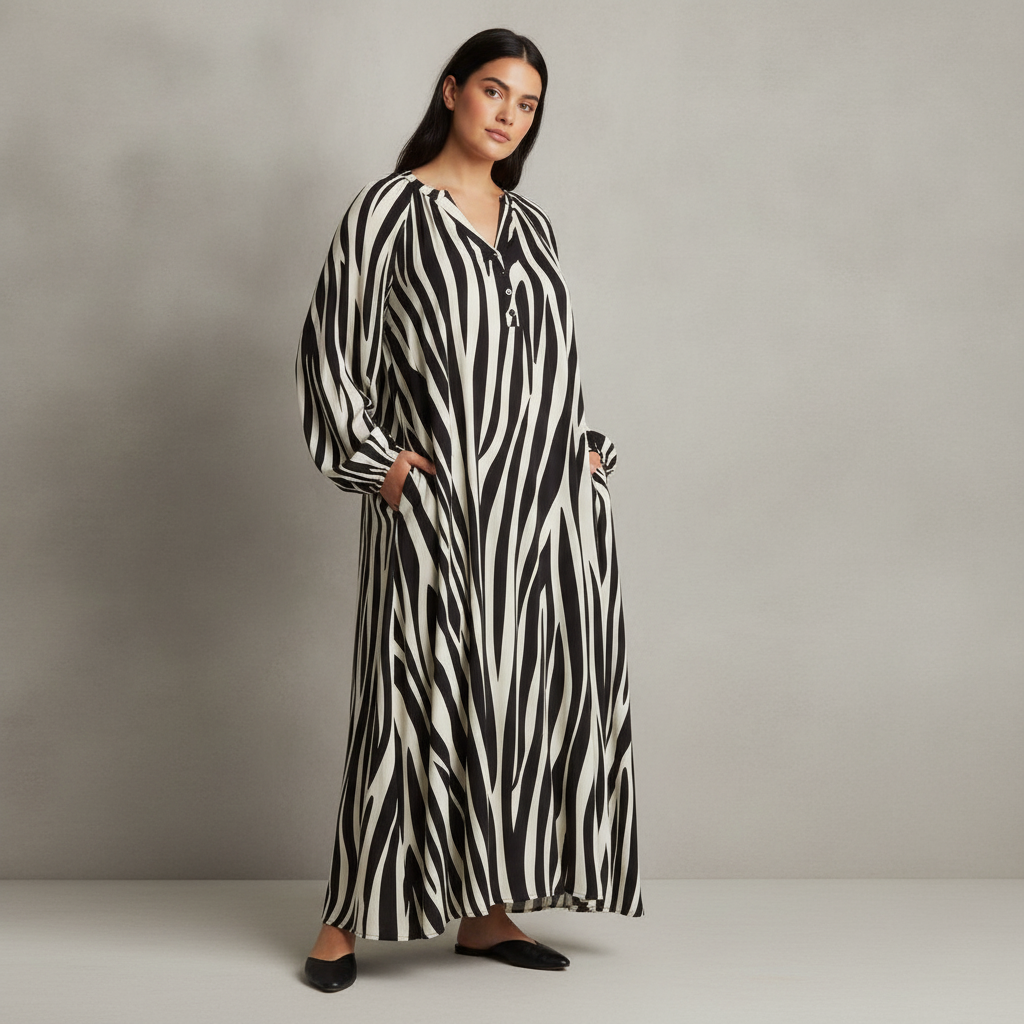
Tall: your whole life is hems landing two inches north of where the picture promised. Buy the maxi, not the midi, and the long sleeve, because on you a three-quarter is a bracelet sleeve. A printed long-sleeve maxi is one of the few things you can order without doing math first.
Shoes, since they change the whole hemline
A low-vamp shoe — cut low across the top of the foot, a d'Orsay flat, a pump with a shallow throat — leaves a stretch of foot visible, and that bit of visible foot keeps a midi from ending your leg abruptly at the calf. A higher-vamp closed-toe shoe does the opposite. Heavier, more grounded, exactly right with opaque stockings, and it's why boots and midis look so settled together in the winter.
Under a maxi almost none of this shows, so wear whatever you can stand for four hours at a chasunah.
Neither one is inherently more tznius than the other. Communities differ on open toes, on stockings, on how much foot is foot. You already know where you hold.
None of this survives the day you try something you were never supposed to wear and it turns out to be the best you've looked in a year. Fit ideas are a start, not a verdict, and they can't account for the skirt that makes you walk faster. You can tell from across a room when a woman likes what she's wearing. She stops adjusting things. She stops checking her reflection in the oven door. That's the part no seam can fake, and it's why the outfit you feel good in beats the technically correct one every time.
Go order the one you keep thinking about.
More from The Edit